New service for reliable monitoring of agricultural soil carbon balance – Cense Analytics and the Finnish Meteorological Institute combine their expertise
Cense Analytics and The Finnish Meteorological Institute (FMI) offer a new joint service that produces field-parcel-level estimates of soil carbon stock, carbon sink and carbon emissions. The service is aimed at food industry companies, carbon market operators, farmers and auditors. The methodology can also be used to improve greenhouse gas inventories.
The service combines the soil carbon measurement method developed by Cense Analytics and FMI’s calculation system based on satellite, weather and soil data.
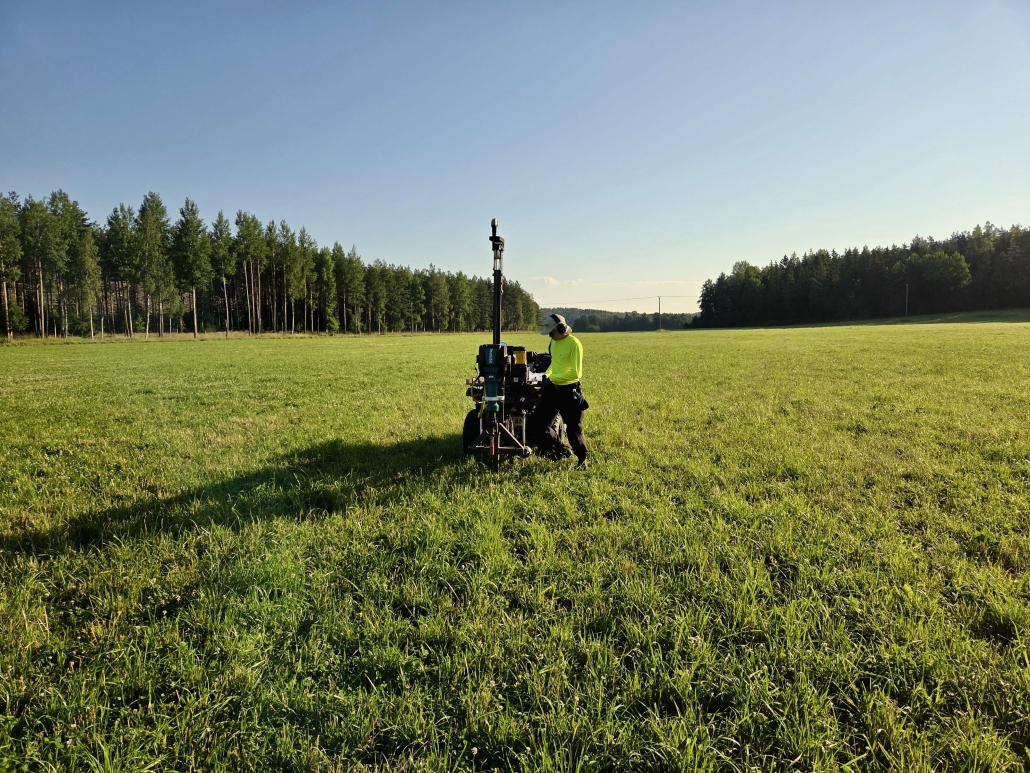
Cense Analytics measures the soil carbon content of field parcels using our proprietary laser-based field measurement device. Measurements are taken from soil samples rapidly, cost-effectively and reliably directly in the field. The method is compatible with the most common carbon certification and reporting standards. We also collect the farm management data needed for the calculations and deliver it to FMI.
FMI calculates the annual carbon balance for each field parcel based on this data, satellite observations and weather data. The calculation is based on FMI’s CARBS method (Carbon Balances and Stocks). It combines the Yasso soil carbon model, daily gross primary productivity estimates derived from satellite measurements, and a Bayesian statistical method. In addition to the carbon balance, the method produces an estimate of the uncertainties in the calculations. CARBS has been developed using field carbon measurement data, and its components have been described in peer-reviewed scientific publications. The results can be delivered to clients as a report or directly to the client’s own systems via an interface.
“Reliable measurement of soil carbon fluxes has been a missing piece in land use carbon footprint assessment. This collaboration complements our efforts to measure and verify every tonne of carbon sequestered into or released from the soil,” says Jan Viljanen, Research Director at Cense Analytics.
“The amount of soil organic matter affects both the carbon footprint of food production and the ability of fields to adapt to climate change. Until now, reliable monitoring has been costly and laborious. The collaboration with Cense Analytics brings a cost-effective and widely applicable solution into practice,” says Professor Jari Liski, Director of Climate Research at the Finnish Meteorological Institute.
The results of the service can be used in carbon balance reporting for food industry value chains and in verifying the results of carbon farming on carbon markets. The method is applicable in Finland and more broadly across Europe.
The Finnish Meteorological Institute is a government research and service institution operating under the Ministry of Transport and Communications, and one of Europe’s leading centres for atmospheric research.